- Home
- Analytical Funnels

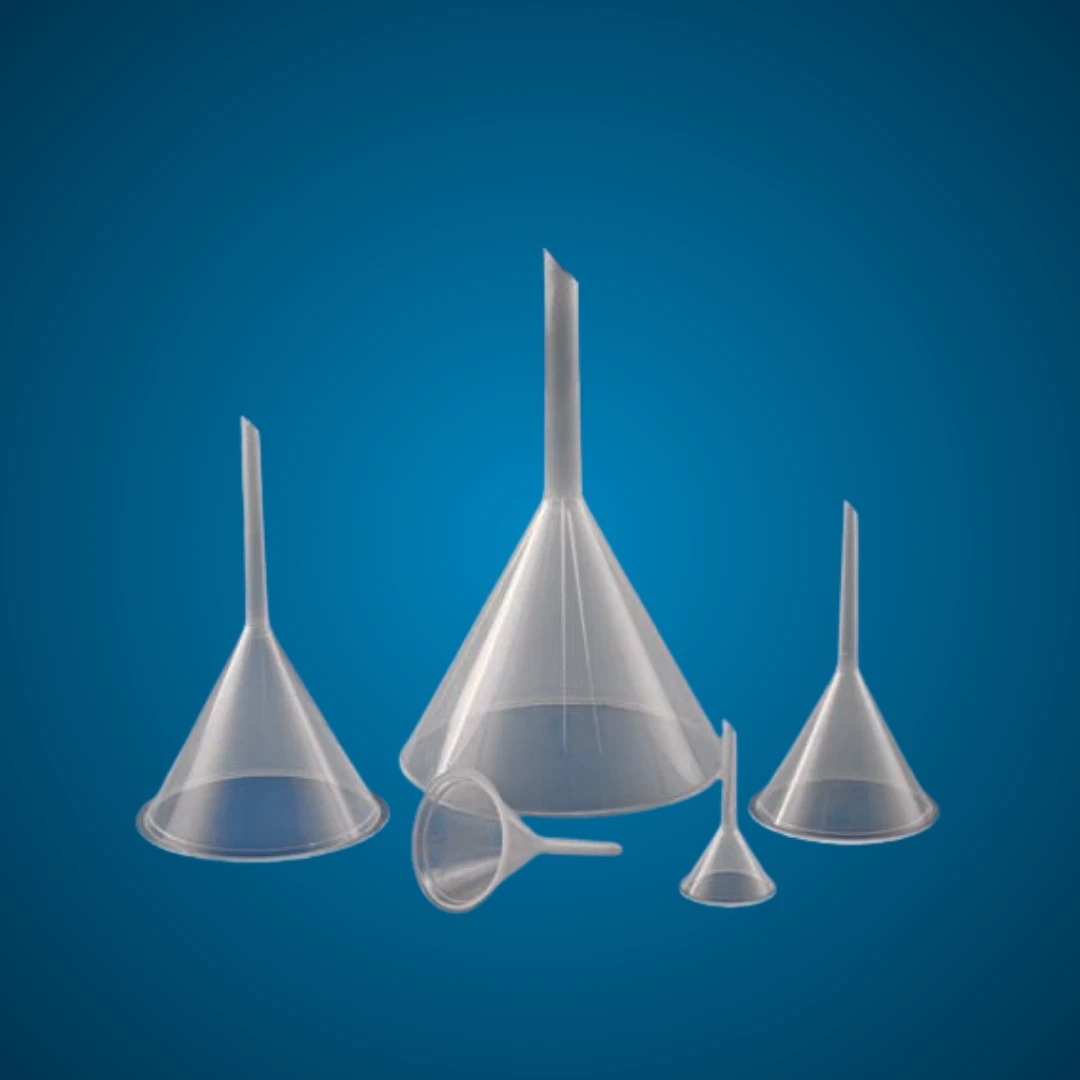
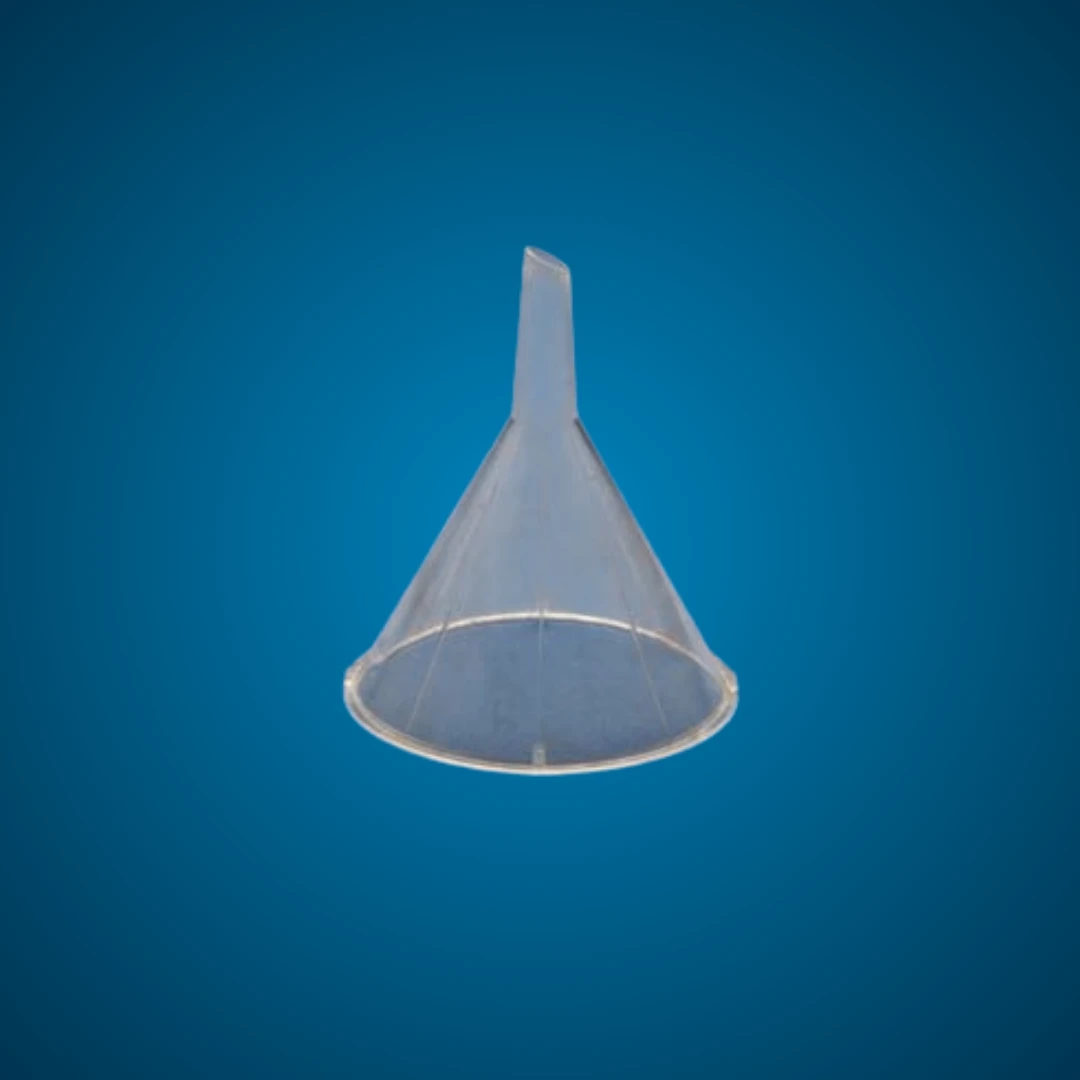
Material : PP Material Conforming to US FDA 21CFR
HSN Code : 39269099
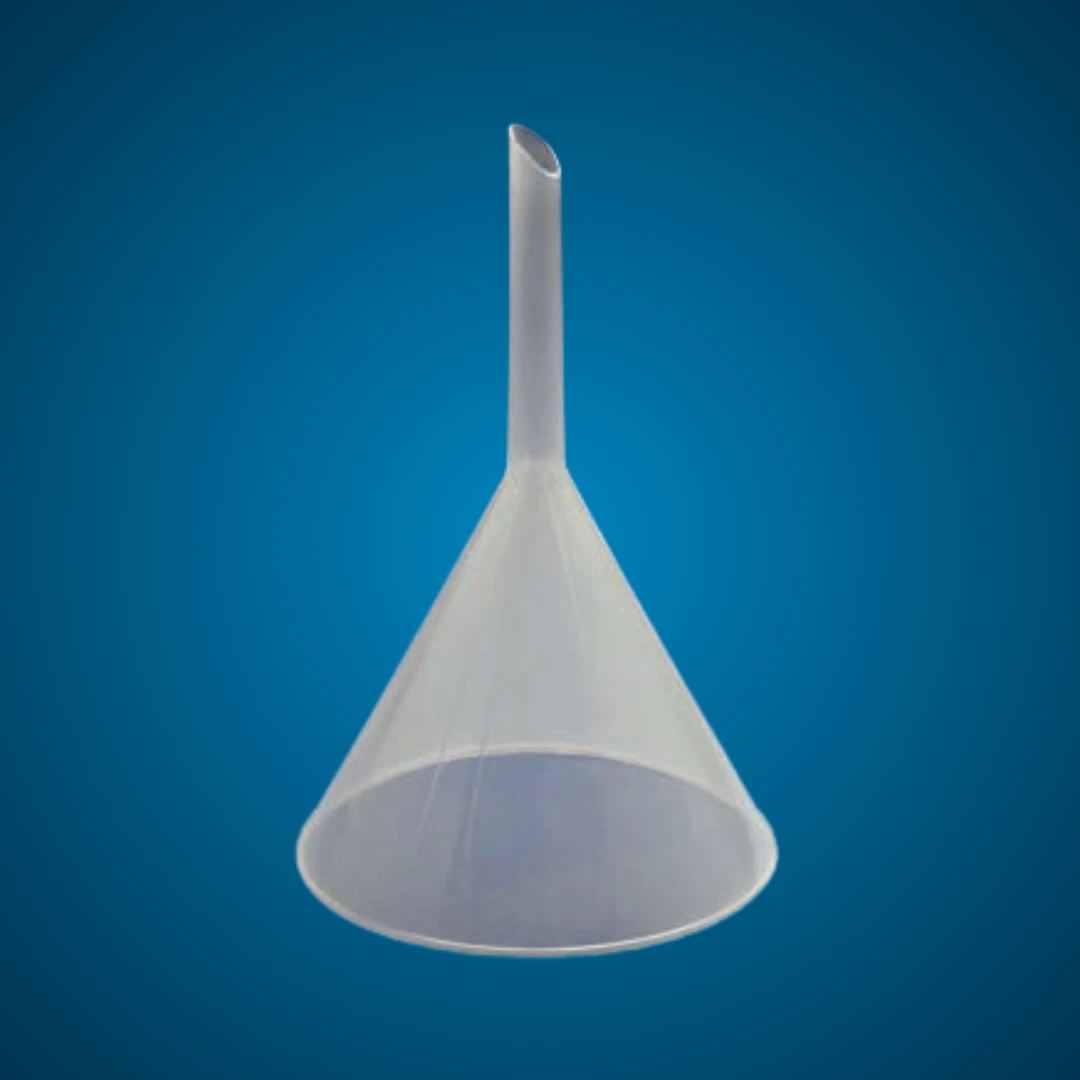
Polylab presents top rated and best Analytical Funnels, specially developed for precise and controlled transfer of liquids in laboratory procedures. Crafted from high-grade, chemically stable plastic, these funnels are ideal for analytical work where accuracy and cleanliness are essential.
As reliable manufacturers and suppliers, Polylab ensures that every analytical funnel is designed with attention to detail and performance. The smooth inner surface enables uninterrupted flow of liquids, reducing residue buildup and ensuring accurate transfer during experiments.
Designed for efficiency and durability, Polylab Analytical Funnels offer excellent resistance to a wide range of laboratory chemicals and repeated use. Their ergonomic shape provides a comfortable grip, allowing easy handling even during delicate operations.
Code | Particulars | Packing |
|---|---|---|
57199 | 35 mm | 72 Pcs |
57200 | 50 mm | 72 Pcs |
57201 | 62 mm | 36 Pcs |
57202 | 75 mm | 36 Pcs |
57203 | 100 mm | 36 Pcs |
Recognized among the best manufacturers and suppliers, Polylab continues to deliver dependable labware solutions. These analytical funnels are an essential choice for laboratories requiring precision, consistency, and safe liquid handling.
Analytical Procedures : Ideal for precise transfer of liquids in testing and experiments.
Laboratory Research : Supports accurate sample preparation and handling.
Chemical Handling : Suitable for safe pouring of reagents and solutions.
Educational Use : Widely used in schools and colleges for practical training.
Quality Control Labs : Helps maintain consistency in testing processes.
Precision Flow Design : Engineered to provide smooth and accurate liquid transfer with minimal loss.
Chemically Stable Material : Suitable for handling acids, solvents, and analytical reagents.
Smooth Inner Surface : Reduces liquid retention and ensures clean pouring.
Ergonomic Structure : Easy to hold and use during detailed laboratory procedures.
Reusable & Durable : Designed for long-term use without compromising performance.
Consistent Product Quality : Manufactured under strict quality standards for dependable performance.
Wide Industry Acceptance : Preferred by laboratories and institutions for reliable labware.
Modern Production Techniques : Designed using advanced methods for precision and efficiency.
Value-Oriented Pricing : Offers cost-effective solutions without compromising quality.
Reliable Distribution Network : Ensures timely supply and product availability.
The 60° body angle is a critical design feature that distinguishes analytical funnels from general-purpose funnels. This specific angle is optimized for quantitative analytical work and offers several important advantages. First, the 60° angle matches the standard cone angle of analytical filter paper, ensuring that the filter paper sits perfectly against the funnel walls without gaps or wrinkles that could allow sample bypass. Second, this geometry promotes smooth, consistent liquid flow during gravity filtration, maximizing filtration efficiency. Third, the 60° angle facilitates complete drainage of the filtrate, minimizing sample hold-up and ensuring quantitative transfer—essential for accurate analytical results. Fourth, this angle provides the ideal balance between filtration speed and filter paper support. Funnels with steeper angles may cause filter paper to collapse, while shallower angles can slow filtration excessively. The precision 60° angle of Polylab Analytical Funnels represents the optimal geometry for analytical chemistry applications, developed through decades of laboratory practice and now engineered in durable, FDA-compliant polypropylene.
The innovative dual-rib design of Polylab Analytical Funnels addresses one of the most common problems encountered during gravity filtration: air blockage or vapor lock. The internal ribs create small, discrete channels between the funnel wall and the filter paper. These channels serve several critical functions: they prevent the filter paper from forming an airtight seal against the funnel, allow displaced air to escape during filtration, and enable continuous liquid flow without the intermittent stopping and starting that occurs with non-ribbed funnels. This results in faster, more consistent filtration and significant time savings during routine procedures. The external ribs provide equally important benefits: they create space between the funnel stem and the receiving vessel wall, allowing air to escape from the receiving vessel and preventing pressure buildup that could slow or stop filtration. They also help center the funnel securely in the receiving vessel, preventing tipping or instability. Together, these rib systems ensure that filtration proceeds smoothly, efficiently, and without interruption, making Polylab Analytical Funnels the preferred choice for busy analytical laboratories where time and efficiency are critical.
Polylab polypropylene analytical funnels offer numerous significant advantages over traditional glass funnels. The most obvious benefit is durability—polypropylene funnels are virtually unbreakable, eliminating the safety hazards and replacement costs associated with broken glassware. This is particularly valuable in high-throughput laboratories, teaching environments, and field applications where glass breakage is a constant concern. Polypropylene is also significantly lighter than glass, reducing user fatigue during extended filtration procedures and making these funnels easier to handle. From a chemical resistance perspective, polypropylene offers excellent compatibility with a wide range of laboratory reagents, including many acids and bases that can etch or attack glass over time. The material is also completely non-wetting for many aqueous solutions, promoting complete drainage and reducing sample loss. Polypropylene funnels are autoclavable, allowing for sterile applications, and they do not have the surface imperfections that can sometimes trap samples in glass funnels. Additionally, the cost-effectiveness of polypropylene, combined with its durability, makes these funnels an economical choice for laboratories with high-volume filtration needs. While glass funnels remain appropriate for certain specialized applications, polypropylene analytical funnels offer superior practicality, safety, and value for the vast majority of laboratory filtration procedures.
Polylab Analytical Funnels are designed to accommodate standard analytical filter paper sizes corresponding to their diameter specifications. For the 35 mm funnel (Code 57199), compatible filter papers are typically 35 mm or 42.5 mm circles, suitable for small-scale filtrations into test tubes or small receiving vessels. The 50 mm funnel (Code 57200) accommodates 50 mm or 55 mm filter papers, ideal for general analytical work. The 62 mm funnel (Code 57201) works with 55 mm or 70 mm papers, providing versatility for medium-scale filtrations. The 75 mm funnel (Code 57202) accepts 70 mm or 90 mm papers, suitable for larger analytical preparations. The 100 mm funnel (Code 57203) accommodates 90 mm, 110 mm, or 125 mm papers, perfect for preparative-scale filtrations and applications requiring larger sample volumes. The precise 60° angle of these funnels ensures proper seating of all standard analytical filter papers, regardless of brand or grade, providing consistent, reliable performance across all common filtration applications.
Yes, these polypropylene analytical funnels are suitable for use with a wide range of organic solvents commonly encountered in analytical chemistry. Polypropylene offers excellent resistance to alcohols, aldehydes, esters, ketones, and many aliphatic hydrocarbons. However, it is important to note that polypropylene can be attacked by some organic solvents, particularly aromatic hydrocarbons (such as toluene and xylene), chlorinated solvents (such as chloroform and dichloromethane), and some strong oxidizing agents. For routine analytical applications involving common solvents like methanol, ethanol, acetone, ethyl acetate, and hexane, these funnels perform excellently. For applications involving aggressive or unusual solvents, we recommend consulting our comprehensive chemical resistance chart or contacting our technical support team for specific compatibility guidance. The funnels chemical resistance, combined with its FDA-compliant material, ensures that no extractable contaminants will leach into your samples during filtration, maintaining sample integrity for accurate analytical results.
Yes, Polylab Analytical Funnels are fully autoclavable and can be sterilized using standard laboratory autoclave cycles. Manufactured from high-quality polypropylene, these funnels withstand repeated steam sterilization at 121°C (250°F) at 15 psi for 20 minutes without deformation or degradation. This makes them suitable for applications requiring sterile filtration equipment, such as microbiological media preparation, sterile sample processing, and pharmaceutical manufacturing. The material maintains its structural integrity and chemical resistance properties through multiple sterilization cycles, ensuring long-term value. For proper sterilization, simply clean the funnels thoroughly, place them in the autoclave using standard loading procedures, and run a normal sterilization cycle. The corrosion-proof nature of polypropylene ensures that autoclaving will not cause rust or degradation, unlike metal components. After sterilization, allow the funnels to cool before use or storage. This autoclavable feature adds significant versatility to these funnels, making them suitable for both routine analytical work and sterile applications.
Polylab Analytical Funnels are precision-moulded to exacting specifications. The approximate dimensions for each size are as follows:
35 mm Funnel (57199): Top Diameter 35 mm, Stem Length 40 mm, Overall Height 65 mm
50 mm Funnel (57200): Top Diameter 50 mm, Stem Length 45 mm, Overall Height 80 mm
62 mm Funnel (57201): Top Diameter 62 mm, Stem Length 50 mm, Overall Height 95 mm
75 mm Funnel (57202): Top Diameter 75 mm, Stem Length 55 mm, Overall Height 110 mm
100 mm Funnel (57203): Top Diameter 100 mm, Stem Length 60 mm, Overall Height 130 mm
All funnels feature the precise 60° body angle that defines analytical funnels. These dimensions may have minor manufacturing tolerances. For applications requiring highly precise dimensional specifications, please contact our technical support team for detailed engineering information.
Maintaining Polylab Analytical Funnels is simple and straightforward, requiring minimal effort to keep them in optimal condition. For routine cleaning after use with non-hazardous materials, rinse the funnel thoroughly with an appropriate solvent to remove residual chemicals, then wash with mild laboratory detergent and warm water. Use a soft brush or sponge to gently clean both the interior and exterior surfaces, paying attention to the ribbed areas where residues might accumulate. Rinse thoroughly with tap water followed by a final rinse with distilled or deionized water. Allow the funnels to air dry completely or wipe with a lint-free lab cloth before storage. For stubborn residues, soaking in appropriate cleaning solutions may be necessary. For applications requiring sterile equipment, simply autoclave the clean funnels using standard cycles. Avoid using abrasive cleaners, scouring pads, or harsh chemicals that could scratch the surface or degrade the polypropylene. With this simple care regimen, your Polylab Analytical Funnels will provide years of reliable, consistent performance, maintaining their smooth finish and precise geometry through countless filtration procedures.
PolyLab offers a comprehensive range of high-quality plastic laboratory ware designed for accuracy, durability, and everyday laboratory applications across education, research, healthcare, and industrial sectors.
Copyright © 2026 PolyLab, All Rights Reserved.